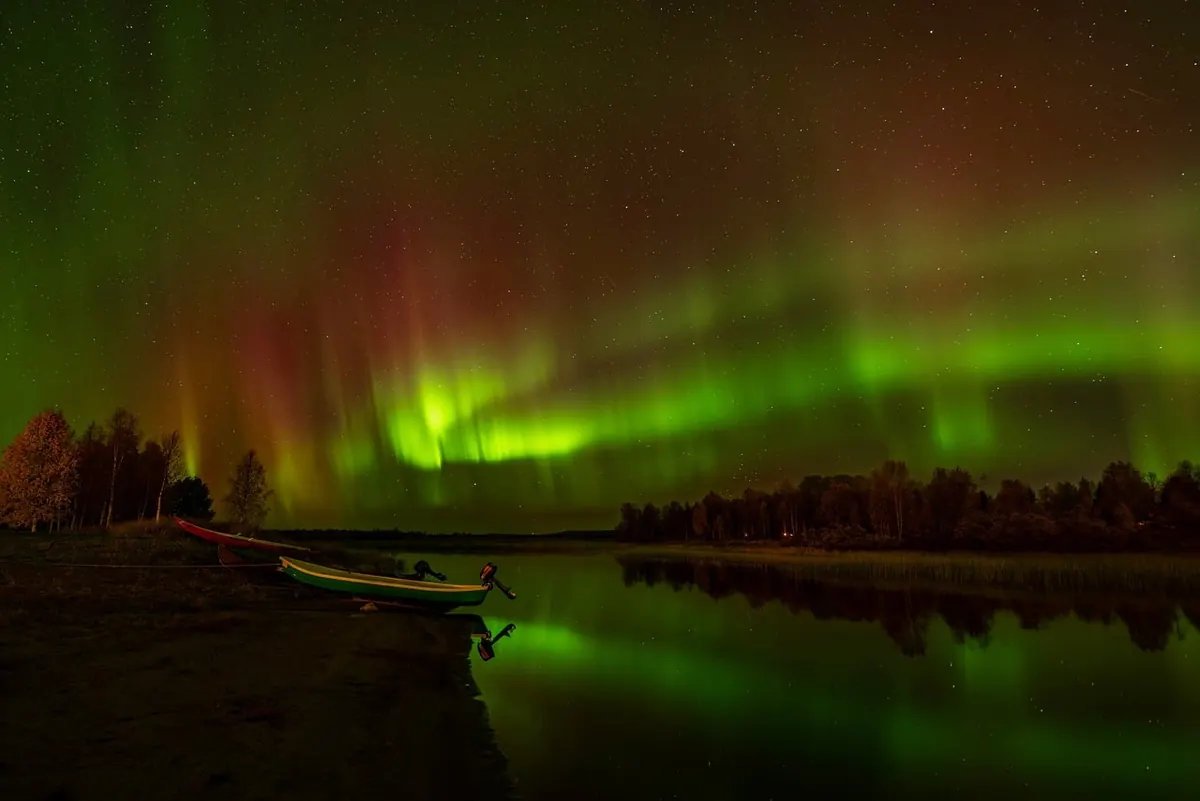
The first clear aurora you see from Britain will probably arrive at an inconvenient moment. It will be a Tuesday, there will be work in the morning, and the best display will happen somewhere with a better horizon than yours. None of that matters once a pale green arc settles over the northern sky. What makes it bearable is that the warning signs come hours earlier, in data you can read on a phone while the kettle boils. The sun is not subtle. It posts its intentions in numbers, and those numbers are free.
What you are actually watching
Three things on the sun matter to anyone standing in a field in Northumberland at midnight.
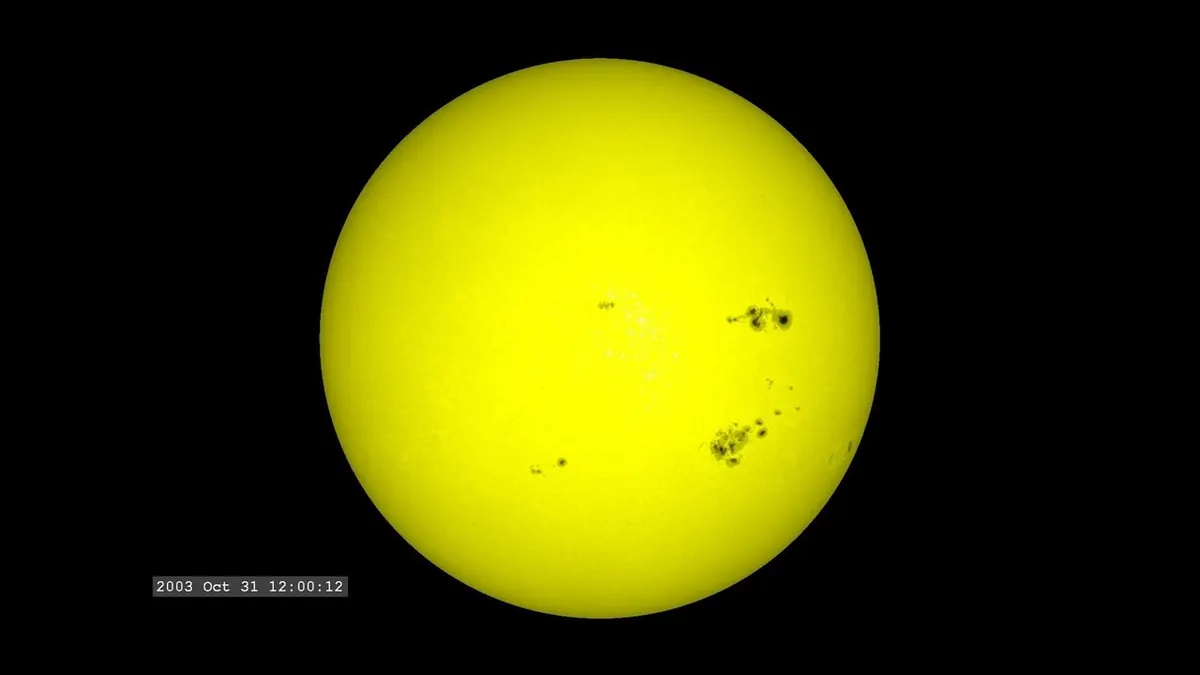
Sunspots and flares. Active regions are knots of tangled magnetic field, visible as dark spots on the solar disc. They crackle with flares, which can disrupt radio signals but rarely deliver auroras on their own. A flare is the flash, not the punch.
Coronal mass ejections. A CME is a cloud of plasma flung outwards, sometimes directly at us. This is the punch. Fast ones cover the distance in a day or less; sluggish ones can take three. A flare is often the clue that a CME is on its way.
The solar wind. A constant stream of charged particles, normally around 300 to 400 kilometres per second. Usually Earth's magnetic field shrugs it off. When the wind speeds up and its magnetic field turns southward, energy pours into our atmosphere and the auroral oval swells southwards.
The handful of numbers worth learning
You do not need a physics degree. Five values cover most of it.
- Bz — the north–south direction of the incoming magnetic field. Negative means southward, which is what you want. A sustained Bz of minus 5 or lower is promising; minus 10 or lower with a fast wind is when things get interesting.
- Solar wind speed — above roughly 500 km/s, worth a look at the sky; 700 km/s and climbing is a genuine event.
- Density — a sudden jump often signals the arrival of a CME shock front.
- Kp — a three-hour planetary average from 0 to 9. Kp 5 counts as a storm. As a rough guide, Scotland can produce naked-eye auroras from Kp 5, northern England around Kp 6 to 7, and southern England needs something much stronger. Local conditions vary enormously, so treat these as hints rather than rules.
- Dst — a measure of the ring current, useful for confirming that a storm is genuinely underway. Values below about minus 50 nanoteslas indicate a significant one.
Live solar wind readings come from spacecraft parked at the L1 point, about 1.5 million kilometres upstream. That gives roughly 30 to 60 minutes of warning before the wind reaches us. Enough time to put boots on.
Where and when to look from the UK
Geomagnetic latitude matters more than the map. Shetland, Orkney, Caithness, the Outer Hebrides and Aberdeenshire sit closest to the auroral oval. Northumberland, Cumbria and North Yorkshire get regular shows in stronger storms. Southern England needs a serious event, but it happens.
Find a spot with an open northern horizon and no streetlights between you and it. A beach, a moor, a quiet lane at the edge of a village. Then accept that weather, not space, will decide most of your nights: a Kp 8 storm behind thick cloud is worth nothing, while a modest Kp 5 under clear skies can be magical.
Timing helps too. Displays often peak between about 10pm and 2am, and the bright bursts come in substorms that flare and fade within twenty minutes. Around the equinoxes, in March–April and September–October, the odds improve. And remember the most common beginner's disappointment: to the naked eye, a weak aurora looks like a pale grey arc, not a green curtain. Cameras see colour far better than you do.
A five-minute daily routine
- Morning. Glance at the solar disc imagery and note whether any large, complex active regions are facing Earth. Check whether any Earth-directed CMEs have been reported.
- Afternoon. Look at the day's Kp forecast. If a watch has been issued, move plans around rather than cancelling them.
- Evening. Check real-time Bz and speed. If Bz has been negative for an hour or two and the speed is rising, start thinking about where you would drive.
- Before bed. Check the magnetometer traces from the UK observatories at Lerwick, Eskdalemuir and Hartland, then the cloud forecast. If both look decent, go outside and look north for ten minutes.
- Afterwards. Write down what you saw and what the numbers were. Your own log will teach you more about your local sky than any forecast.
Alerts, apps and a word on safety
Set up alerts rather than refreshing pages. The NOAA Space Weather Prediction Center publishes Kp forecasts, aurora oval maps and solar wind data. Space Weather Live and SolarHam present the same information in friendlier dashboards. The British Geological Survey publishes UK geomagnetic data. Aurora groups on social media are useful for real-time sightings, though they inflate expectations roughly in proportion to their size.
Never look directly at the sun without a certified solar filter. Sunglasses, stacked camera filters and ordinary telescope eyepieces will not protect your eyes. Use eclipse glasses for a quick glance, or project the image onto card. If you suspect you have damaged your sight, seek medical advice promptly.
Make it a habit, not a hunt
Chasing auroras from Britain is mostly an exercise in patience, so keep the barrier to going out as low as possible. Keep a bag by the door with a flask, warm layers, a red torch and a charged power bank. Learn one forecast page properly instead of ten badly. Then set a single alert for your area and let it interrupt an ordinary evening.
If you photograph what you find, a tripod, manual mode, a wide aperture and a 10 to 20 second exposure at ISO 1600 will do the job; focus manually at infinity and let your eyes adapt for twenty minutes first. But the photograph is a souvenir. The thing worth building is the routine — check the numbers, watch the northern horizon, and be willing to step outside on a night when nothing is guaranteed.
Photo: suju-foto / Pixabay