Most people in Britain who have seen the aurora did not plan it. A message arrived, they looked outside, and twenty minutes later they were standing in a dark field. That is the whole trick: the sky does the rest.
Setting up alerts takes about fifteen minutes and costs nothing. The setup below is aimed squarely at UK conditions, where our latitude, our cloud cover and our light pollution all work against us — and where the right notification at the right moment is the difference between a memory and a missed night.
Know what you actually want to be told
The number most aurora chasers quote is Kp, a planetary index averaged over three-hour windows. It is useful, but it is global. It cannot tell you whether the sky above Aberdeenshire or Devon is doing anything interesting. A Kp 6 that peaks over Siberia can leave the UK under a quiet magnetosphere; a Kp 5 with the solar wind turned southward can light up the north of Scotland.
What matters locally is what UK magnetometers are registering. As a rough guide, the further north you are, the less activity you need:
- Kp 5 — a realistic chance from Shetland, Orkney, Caithness and the far north of Scotland.
- Kp 6 to 7 — northern England, Northern Ireland, southern Scotland, and sometimes north Wales.
- Kp 8 or above — exceptional, and the sort of night when people in the Midlands and even southern England start looking north.
These are rules of thumb, not promises. Aurora arrives in bursts around substorms, so a night can be quiet for two hours and then throw up a bright arc in ten minutes. It is also worth watching the direction of the solar wind's magnetic field. When it turns southward — described as negative Bz — energy transfers into our magnetosphere far more efficiently, and a modest Kp forecast can outperform a formal storm warning. If Bz swings north while Kp stays high, the show may never start.
AuroraWatch UK: the free UK-specific alert
AuroraWatch UK, run by Lancaster University, is the natural first subscription. It uses magnetometer data from UK observatories and issues free alerts by email, with thresholds tuned to British latitudes rather than to the planet as a whole.
You choose an alert level. Amber means activity is possible somewhere in the UK; red means it is likely. Both are nowcasts: they tell you something is happening now, not that the sky above your house is clear.
Why a nowcast suits us
British weather changes by the hour. A forecast three days out is a hint; a magnetometer reading from twenty minutes ago is evidence. Pair the two and you have something you can act on. If AuroraWatch goes red while the Met Office cloud map shows a clear gap over your county, that is your cue to move.
Add storm watches for anything further ahead
For advance notice, subscribe to the email alerts from NOAA's Space Weather Prediction Center. They are free and cover geomagnetic storm watches and warnings, Kp forecasts and significant solar flares. Everything arrives in UTC, so remember to add an hour during British Summer Time — a 21:00 UTC warning is 10pm on your clock.
The Met Office space weather pages give a UK-facing forecast and a plain-English discussion of coronal mass ejections and coronal holes. The British Geological Survey publishes geomagnetic activity forecasts built from the same UK observatories that feed AuroraWatch, which makes them a useful cross-check when the picture looks marginal.
Words worth knowing when an alert lands
- CME — a coronal mass ejection, a cloud of plasma thrown out by the Sun. The interesting ones take roughly one to three days to reach us.
- Coronal hole high-speed stream — a recurring stream of faster solar wind. It can drive activity on a roughly 27-day cycle, which is why a good aurora night sometimes repeats about a month later.
- Geomagnetic storm watch — an advance heads-up that a disturbance is expected.
- Bz — the north–south direction of the solar wind's magnetic field. Southward is what you want.
Put it on your phone, not just in your inbox
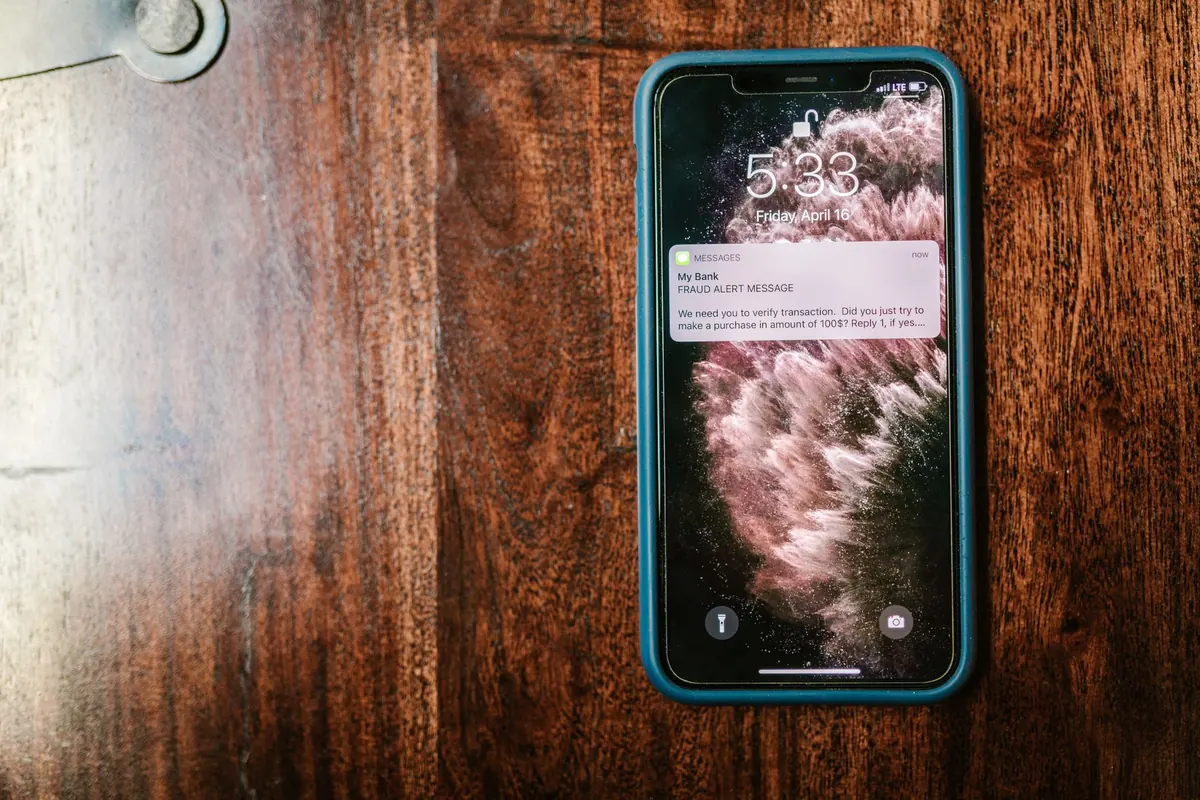
Email is fine during the day. At half past eleven at night you want a buzz. Aurora apps such as SpaceWeatherLive offer push notifications for Kp thresholds, flares and CME arrivals, and give you the raw solar wind numbers if you prefer to judge for yourself.
A sensible set-up uses no more than three notifications:
- One UK nowcast alert, tied to magnetometer data.
- One forecast or storm-watch service for advance warning.
- One cloud-cover forecast with hourly detail, so you can check before you drive anywhere.
Turn everything else off. Two or three notifications you trust beat twenty you learn to ignore.
Tune the settings so alerts stay useful
- Pick a level you will actually act on. If you live in the south of England, a low-level alert will wake you for nothing night after night, and you will soon mute it. Set the threshold for the lowest activity that would genuinely get you dressed and out of the door. In Cornwall that might be a red AuroraWatch alert or Kp 7; in Inverness an amber alert may be enough.
- Match the alert to the journey. A notification that asks you to drive two hours should be rarer and more reliable than one that asks you to step into the garden. Use tighter thresholds for distant dark-sky sites and looser ones for your own back garden.
- Keep a cloud check in the same routine. Space weather is only half the forecast. Add an hourly cloud-cover app or bookmark the Met Office cloud map, and check it before you commit. A clear sky 40 miles west is often worth more than another Kp point.
- Silence the noise. Turn off alerts for flares, CMEs and every Kp uptick if they do not change your behaviour. Keep the two or three that actually send you outside.
What to do in the first ten minutes after an alert
An alert is a starting gun, not a guarantee. Do these things in order:
- Check the cloud. Look outside, then at an hourly forecast. If your sky is solid grey, do not drive; if there is a clear gap to the north or west, consider it.
- Find a dark, open northern horizon. You do not need a mountain. A beach, a park without floodlights, or a quiet lane facing north can be enough. Avoid streetlights directly in your view.
- Give your eyes twenty minutes. Do not stare at your phone. A faint grey arc may be the aurora; a red or green glow on a camera screen often shows what your eyes are still adapting to see.
- Look for structure. A pale arc low on the northern horizon, a greenish band, or rays that seem to shift when you are not looking directly at them are all good signs. Photograph it with a phone on night mode or a camera at high ISO and a few seconds’ exposure to confirm.
Cloud, moon and light pollution: the UK filters
Even a great geomagnetic forecast can be defeated by a thick layer of cloud or a full moon sitting in the north. Before you travel, check the Met Office cloud cover map, an astronomy-specific forecast such as Clear Outside, and a light pollution map if you are choosing a new site. The moon is not always fatal — a crescent low in the south is manageable — but a bright full moon will wash out all but the strongest displays.
Light pollution matters most near the horizon, which is exactly where UK aurora usually appears. If you live in a city, plan a route to a darker spot in advance: a twenty-minute drive can be the difference between guessing at a grey smudge and seeing a green arc. In the south of England, where the aurora is never high overhead, that dark northern horizon is everything.
An alert does not promise you an aurora. It promises you a chance — and in Britain, a chance acted on quickly is usually the only one you get.
A sample alert routine for a clear Friday night
Suppose NOAA issues a geomagnetic storm watch for Saturday, and AuroraWatch moves to amber on Friday evening. Here is how a practical night might run:
- Friday afternoon: check the three-day forecast, note the UTC times, and look at the cloud map for your region.
- Friday 21:00: if the sky is clear, go outside for five minutes and look north. No aurora yet is normal; you are just checking your viewing spot and dark adaptation.
- Friday 23:30: a red AuroraWatch alert arrives. Check the cloud again. If your northern horizon is clear, get dressed and go.
- Saturday 00:15: at your dark site, look north and wait. If nothing appears in twenty minutes but the magnetometer is still active, stay a little longer; substorms often flare without much warning.
- Saturday 01:00: if cloud has rolled in or the activity has dropped, go home. There will be another night, and the 27-day solar rotation may bring this coronal hole around again.
Common mistakes that cost people the aurora
- Waiting for a “guaranteed” forecast. UK aurora is rarely guaranteed. A red alert with a clear sky is worth acting on; a perfect forecast with cloud is not.
- Driving somewhere without checking the cloud first. You can lose an hour and a tank of fuel to a stratus layer that never breaks.
- Looking in the wrong direction. In Britain, look north — and if you are in Scotland, also check overhead and to the east or west, because displays can spread.
- Using a phone screen at full brightness. It resets your night vision every time. Turn it down, or cover it with a red filter.
- Giving up after ten minutes. Aurora can be static for long periods and then erupt. If the magnetometer is still twitching, patience is part of the kit.
The fifteen-minute setup, summarised
Subscribe to AuroraWatch UK for a UK nowcast. Add NOAA storm watches for advance warning and the Met Office or BGS for a British cross-check. Install one space weather app with push notifications and one cloud-cover app. Set your thresholds so you are only interrupted when you would genuinely go outside. Then leave the rest to the sky.
On the night itself, the rule is simple: when the alert comes, check the cloud, find north, and go. The aurora does not wait for a convenient moment — and in Britain, neither does the weather.
Photo: RDNE Stock project / Pexels